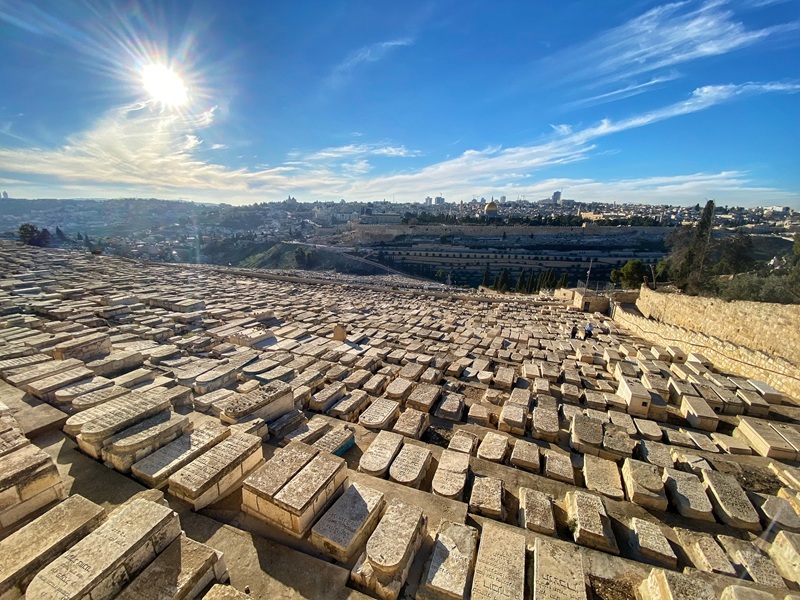
 The day opens with a breathtaking view from the Mount of Olives, the ridge that has watched over Jerusalem for thousands of years. King David himself once fled across this mountain, weeping as he escaped the revolt of his son Absalom. Later, Jewish tradition developed a claim that since the destruction of the Temple, the Divine Presence, or Shechina, has rested upon this mountain. Today, stretching across its slopes lies the vast Jewish cemetery, where countless generations chose to be buried in anticipation of the Messiah.
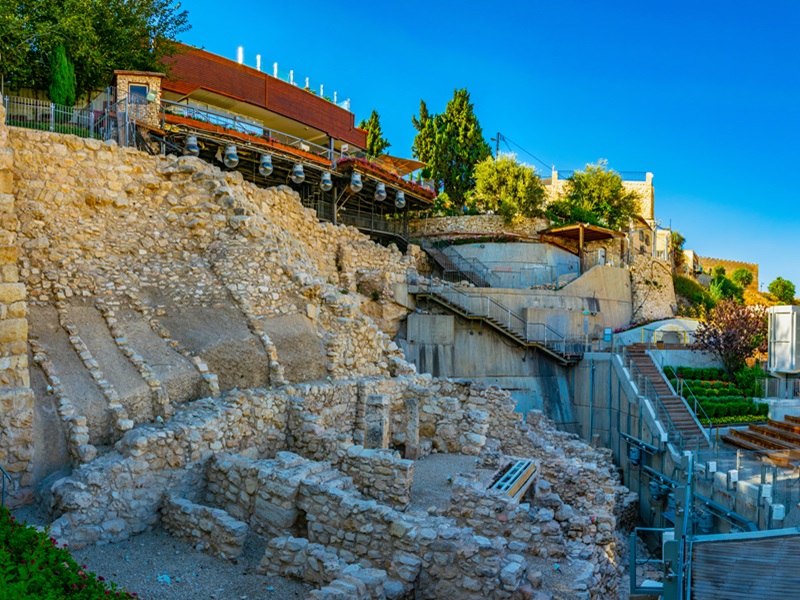 Descending to the City of David brings you to the earliest roots of Jerusalem. This is the place King David established his capital more than three thousand years ago and is now reclaimed and developed by Israel. Excavations here revealed fortifications, palatial structures, and water systems mentioned in the Bible. Walking through Hezekiah’s Tunnel offers a vivid encounter with the ingenuity of the Judean king who secured Jerusalem’s water supply during the Assyrian siege. At its end, the Pool of Siloam, proved to be where ancient pilgrims purified themselves before ascending to the Temple.
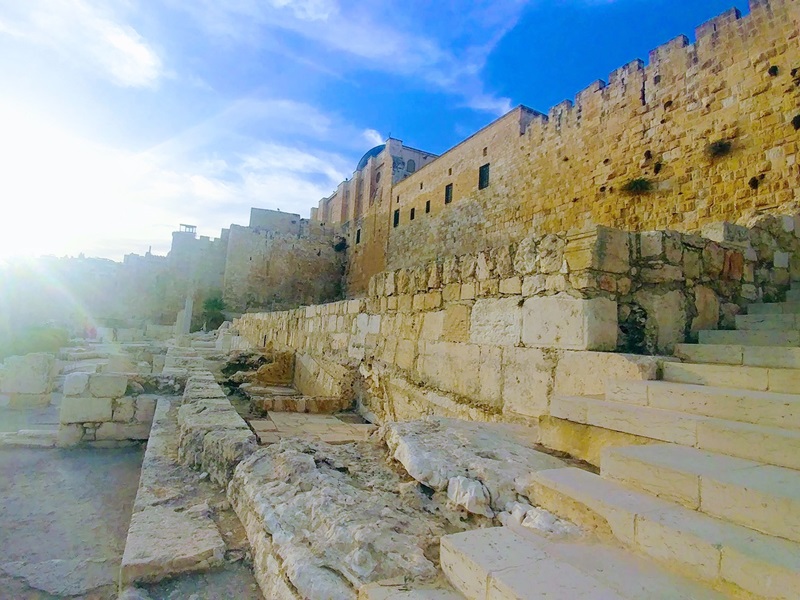 Next comes the Western Wall, the most sacred place of prayer in Jewish life, standing as a living connection to the Second Temple. A moment of quiet reflection here ties visitors to generations who prayed at this very spot. Just nearby, the Southern Wall Archaeological Park preserves remarkable remains of Temple-era Jerusalem. Here one can walk the monumental steps where pilgrims once entered the Temple, and see ancient Jewish ritual baths. For those who wish, joining a group tour beneath the surface at the Western Wall Tunnels reveals massive Herodian stones and hidden chambers along the Temple Mount’s foundations.
 The day concludes at the Israel Museum, home to treasures of Jewish archaeology and culture. At the Shrine of the Book, the Dead Sea Scrolls offer the oldest biblical manuscripts ever discovered. The large Second Temple Model reconstructs Jerusalem in its glory, allowing you to visualize the city at its most glorious Jewish period. Other galleries highlight Jewish art, ritual objects, and archaeological finds that illuminate the long story of Jewish life.
 The second day begins with a visit to Yad Vashem, Israel’s national memorial to the Holocaust. Through personal stories, artifacts, and architecture, the main museum conveys both the tragedy of destruction and the unbreakable spirit of survival. The adjacent memorial gardens and poignant exhibits honor the six million who perished while affirming the resilience and continuity of the Jewish people.
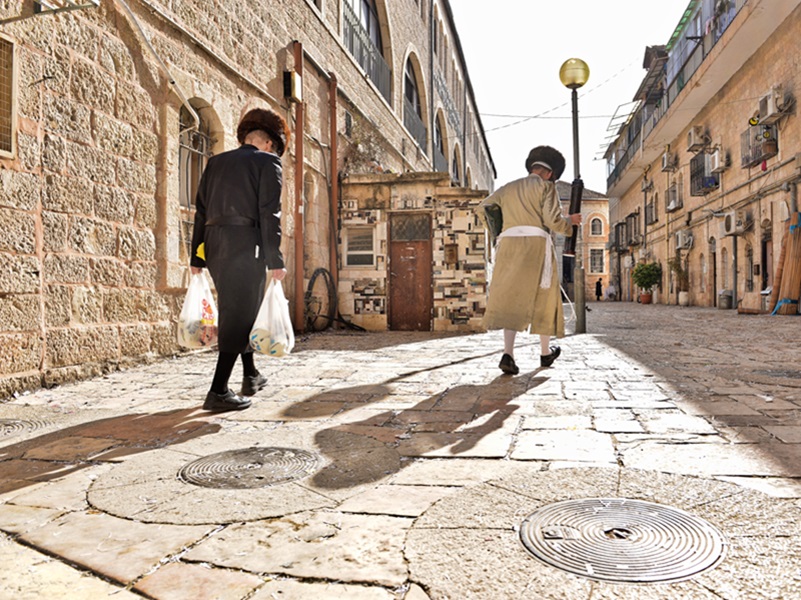 From remembrance, the journey turns to vitality at Mahane Yehuda Market, the bustling heart of Jerusalem’s daily life. The stalls overflow with fresh produce, breads, spices, and flavors brought by Jewish communities from around the world. Lunch here offers a taste of living tradition. Afterward, a drive through the neighborhood of Mea Shearim gives a respectful glimpse of the ultra-Orthodox community, where centuries-old traditions shape daily life with devotion and continuity.
 Reach Mount Zion, home to one of Jerusalem’s most venerated landmarks, the traditional site of King David’s Tomb. While historians debate whether King David was truly buried here, the place has drawn Jewish devotion for centuries. During the years between 1948 and 1967, when Jordan controlled the Old City and Jews were barred from accessing the Western Wall, the Tomb of King David became a substitute pilgrimage site for Jewish worship. Crowds would gather here to pray, sing psalms attributed to David, and feel a spiritual closeness to the Temple Mount. Even today, the chamber is filled with visitors offering prayers and reflecting on David’s role as the poet of Israel and the founder of Jerusalem as the nation’s capital.
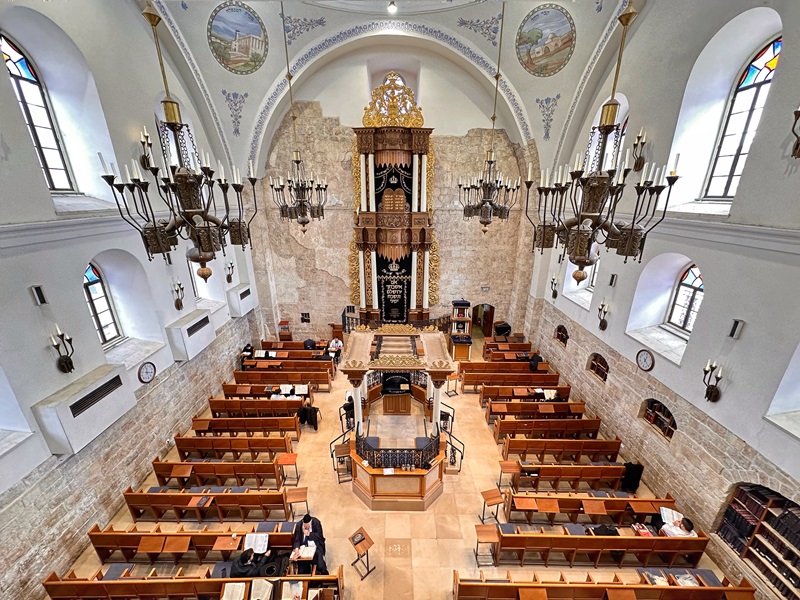 Conclude the day at the Jewish Quarter, a powerful symbol of destruction and renewal. In 1948, during Israel’s War of Independence, the Jordanian army conquered the Jewish Quarter, expelled its residents, and destroyed most of it. This era of exile ended dramatically in 1967, when Israeli forces reclaimed the Old City during the Six Day War. Since then, the Jewish Quarter has been revived, rebuilt, and once again filled with Jewish life. Visit the the beautifully restored Hurva Synagogue, the finest example of this renewal, with its dome rising high above the quarter. The adjacent Cardo, once a Roman marketplace and today a lively commercial zone, offers not only a glimpse into ancient Jerusalem but also a fine place to end the tour with Judaica, art, and meaningful memorabilia shopping.
Heritage Journey
Jerusalem is the heart of Jewish history, memory, and tradition. Every stone of the city whispers stories from the Bible, the centuries of Jewish presence, and the modern rebirth of Israel. This two-day journey is designed to connect with the city’s sacred sites, explore its archaeology, and experience both the pain and the resilience of Jewish memory. From ancient foundations to modern vitality, this tour combines stories of faith, tradition, revival, and continuity.